flowchart LR
A(["Idea"]) --> B["Proposal"]
B --> C("Project_1")
B --> D("Project_2")
D --> E("Paper_2")
C --> F("Paper_1")
E --> G("Fame & Glory")
F --> G
Best practices
– NYU Health Sciences Library (2013)
Figure 1: https://penn-state-open-science.github.io/sleic-best-practices-2025-12-02/


Whereas regulators of human subjects research often view data sharing solely in terms of potential risks to subjects, we argue that the principles of human subject research require an analysis of both risks and benefits…
– Brakewood & Poldrack (2013)
…such an analysis suggests that researchers may have a positive duty to share data in order to maximize the contribution that individual participants have made.
– Brakewood & Poldrack (2013)
Tenopir et al. (2020) Fig 7
Tenopir et al. (2020) Fig 8

Houtkoop et al. (2018)
Houtkoop et al. (2018) Figure 3a

Houtkoop et al. (2018) Figure 3b

Houtkoop et al. (2018) Figure 3b

“Preparing your data management and sharing plan” (n.d.)
“Data management & sharing policy overview” (n.d.)
to promote the management and sharing of scientific data generated from NIH-funded or conducted research.
– National Institutes of Health (n.d.)
“Research data management” (n.d.)

Giphy
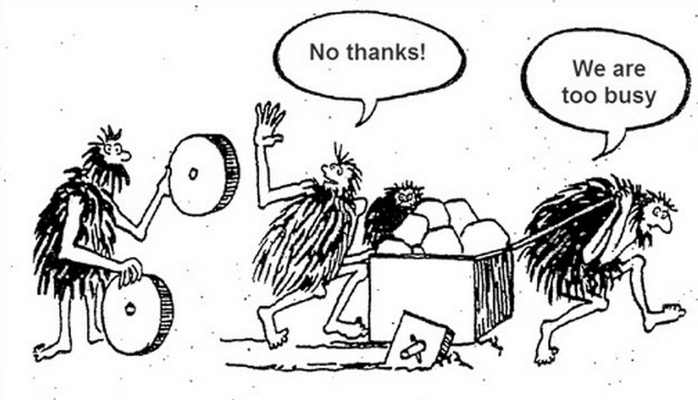
https://teacherhead.com/2017/02/27/reinventing-the-wheel-again/
– PathfindersPerform (2013)
flowchart LR
A(["Idea"]) --> B["Proposal"]
B --> C("Project_1")
B --> D("Project_2")
D --> E("Paper_2")
C --> F("Paper_1")
E --> G("Fame & Glory")
F --> G
flowchart LR
A(["Idea"]) --> B["Proposal"]
B --> C("Project_1")
B --> D("Project_2")
B --> I("IRB protocol")
G(["Data mgmt plan"]) --> B
G <--> I
C --> I
D --> I
D --> E("Paper_2")
C --> F("Paper_1")
flowchart LR A["Project_1"] --> B["Survey"] A --> C["fMRI"] A --> D["Task_1"] A --> E["Task_2"] B --> P["Data_pipeline_1"] C --> Q["Data_pipeline_2"] D --> R["Data_pipeline_3"] E --> R F["Data mgmt plan"] --- B & C & D & E & P & Q & R P --> G["Analysis_1"] Q & R --> H["Analysis_2"] G & H --> I["Poster"] G & H --> J["Paper"]
flowchart TD A["Project_1"] --> B["Survey"] A --> C["fMRI"] A --> D["Task_1"] A --> E["Task_2"] B --> P["Data_pipeline_1"] C --> Q["Data_pipeline_2"] D --> R["Data_pipeline_3"] E --> R F["Data mgmt plan"] --- B & C & D & E & P & Q & R P --> G["Analysis_1"] Q & R --> H["Analysis_2"] G & H --> I["Poster"] G & H --> J["Paper"] C & D & G & H & F --> K["Data repository"]
flowchart LR A["Project_1"] --> B["Survey"] A --> C["fMRI"] A --> D["Task_1"] A --> E["Task_2"] B --> P["Data_pipeline_1"] C --> Q["Data_pipeline_2"] D --> R["Data_pipeline_3"] E --> R F["Data mgmt plan"] --- B & C & D & E & P & Q & R P --> G["Analysis_1"] Q & R --> H["Analysis_2"] G & H --> I["Poster"] G & H --> J["Paper"] B & C & D & G & H & F --> K["OpenNeuro"] B --> L["OSF"] K --- L
Lesson learned
Plan your workflow in as much detail as you possibly can before you start.
Lesson learned
Plans change.
So, evaluate, revise, and update.
Document what you changed, when, and why.
Recommended practice
Version your protocol.
Manual is fine: e.g, nsf-2412345-protocol-2025-12-02v01.docx.
Automated is better:
Google Docs keeps version histories.
Quarto enables git-versioned web sites as protocols.
Gilmore & Adolph (2017)
– “Databrary” (n.d.)
– “PLAY project” (n.d.)
– Gilmore, Raudies, & Jayaraman (2015)
Lesson learned
Documented plans & practices can be reused for new projects.
Be kind to your future (forgetful) self.
Alaina Pearce


(Painful) lesson learned
APIs can change, so be prepared to update your procedures & code.


This talk was produced using Quarto, using the RStudio Integrated Development Environment (IDE), version 2025.9.2.418.
The source files are in R and R Markdown, then rendered to HTML using the revealJS framework. The HTML slides are hosted in a GitHub repo and served by GitHub pages: https://penn-state-open-science.github.io/sleic-best-practices-2025-12-01/

Project & data management: Best practices | © 2025 by Rick Gilmore & Alaina Pearce under CC BY 4.0